
July 15, 2008
For Sale
I have the following items for sale.
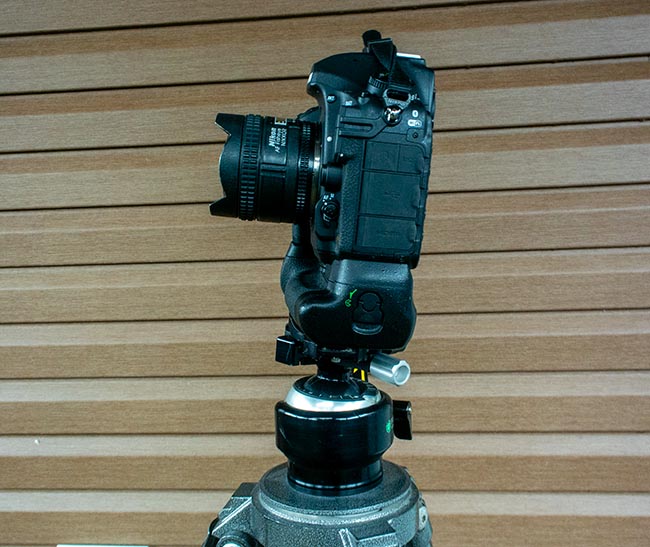
Nikon D100 camera body with MBD100 additional battery grip and three batteries all in very good condition $400
Nikon 17-55 f2.8 DX lens - little used - priced new at $1339 for sale at $999

Think Tank Rotation 360 - brand new never used: Details available at http://www.rotation360.com/

Priced at $279 - for sale at $229
Please contact me by email or call 250 247 9109
July 10, 2008
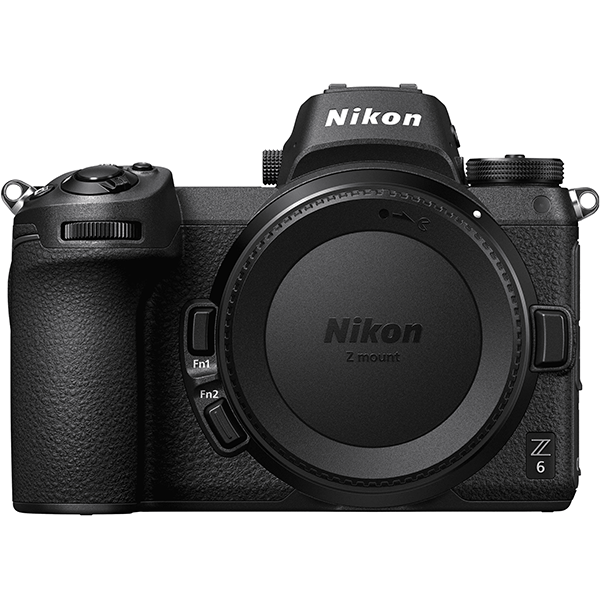
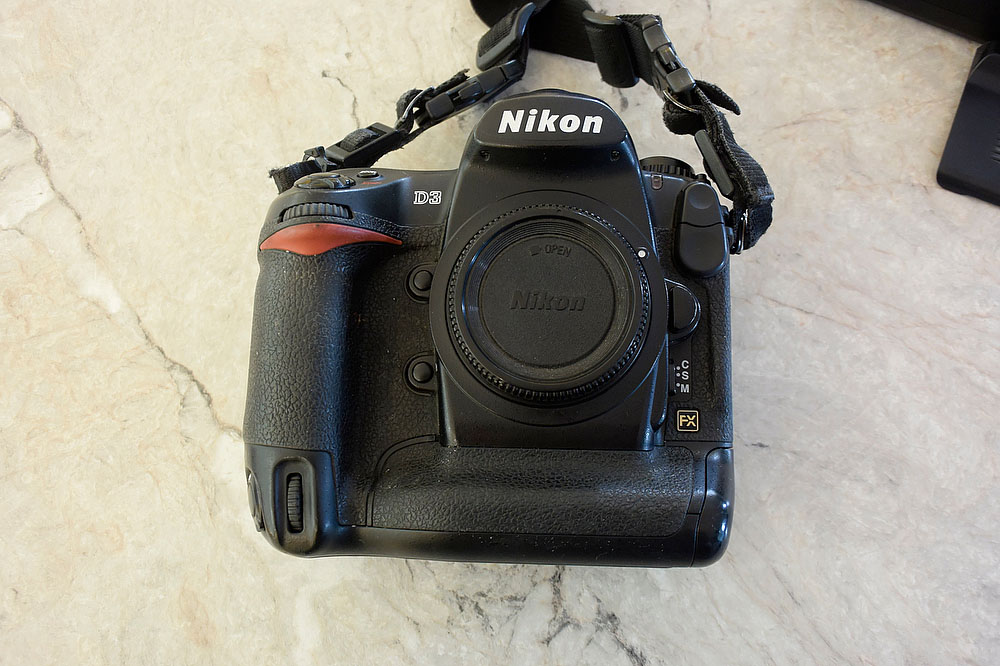
Nikon have announced their second full frame (FX format) camera and a new more powerful flash, the SB-900
The new D700 features almost all of the features of the D3 in a more compact and considerably cheaper package.
Features include:
- The same 12.1-megapixel FX-format (23.9 x 36mm) CMOS sensor with Nikon’s exclusive EXPEED digital image processing
- ISO sensitivity from 200 to 6400 (with lo and high setttings to increse the range and incredibly low noise.
- Continuous shooting up to 5 frames per second: Shoot at up to 8 frames per second with the optional MB-D10 Multi-power Battery Pack.
- High resolution screen with 170-degree wide-angle viewing, and calibrated color
- Fast, accurate 51-point AF with 3D Focus Tracking plus three Dynamic AF modes.
- Dynamic Integrated Dust Reduction System with quad-frequency, ultrasonic sensor cleaning minimizes image degrading dust particles.
With a price tag approximately $2000 less than a D3 you are getting almost all the features except for the ability to record voice clips, a slower frame rate (but almost identical with the addition of the additional battery pack), one CF card slot instead of two, and not much else!!
I hope to do a full review on the camera when I can get my hands on one but this is looking like a good bet as a second full frame body to back up the D3 and to take on back country hikes when weight is an issue.
The new SB-900 flash which replaces the SB-800 as the top of the line Nikon boasts a slew of new features.
- Improved zoom range from 14mm to 200mm
- Automatic FX/DX switching optimizing light distribution.
- Improve light quality by selecting Standard for general illumination, Center-weighted for portraits, or Even for groups or interiors.
- A guide number of 34/111.5 (ISO 100, m/ft), 48/157.5 (ISO 200, m/ft)
- Fast recycling times of, 4.0 sec. with Alkaline-manganese (1.5V), 4.5 sec. with Lithium (1.5V) 3.0 sec. with OxyrideTM (1.5V), 2.3 sec. with Ni-MH (2600 mAh)with only 4 batteries as opposed to the SB-800 requirement of 5 to achieve the fastest times.
- A new (optional extra) high speed battery pack, the SD9
Both the D700 and the SB-900 should become available in late July or early August when I hope to have a review of both units
June 21, 2008
Insecticide ‘killing Kenya lions’
A disturbing report and interview by the BBC on the use of Carbofuran is a very powerful and toxic insecticide. This chemical is being used not to control bugs and plants, it’s original intention but to poison big game animals including lions and other predators.
Report includes an interview with world famous naturalist Dr. Richard Leakey. For full story click here
Control of deforestation from space
Plans to use a state-of-the-art camera onboard a satellite to monitor deforestation levels in Africa’s Congo Basin have been unveiled.
The high resolution RALCam3 camera, designed and built by UK scientists, will provide the first detailed view of the area’s rate of forest cover loss. For full story click here
Warming temperatures dangerously pushing bird migrations ever forward.
Many birds are arriving earlier each spring as temperatures warm along the East Coast of the United States. However, the farther those birds journey, the less likely they are to keep pace with the rapidly changing climate.

Violet-Green Swallow - arriving in nesting areas days earlier each year
Scientists at Boston University and the Manomet Center for ConservationSciences analyzed changes in the timing of spring migrations of 32 species of birds along the coast of eastern Massachusetts since 1970. Researchers at Manomet gathered this data by capturing birds in mist nets, attaching bands to their legs, and then releasing them. Their findings, published in Global Change Biology, show that eight out of 32 bird species are passing by Cape Cod significantly earlier on their annual trek north than they were 38 years ago. The reason? Warming temperatures. Temperatures in eastern Massachusetts have risen by 1.5 degrees Celsius (2.7 degrees Fahrenheit) since 1970. Read full story here
High Mercury levels found in Australian Dolphins
A university study has found significant levels of mercury in samples taken from both live and deceased Dolphins found stranded on the coast near Victoria, Australia. Researchers from the School of Biological Sciences have confirmed levels of mercury found in the dolphins were within a range considered to cause negative health and mental effects and were higher than mercury levels found in populations around the world. Read full story here
Arctic sea ice melt ‘even faster’
Data from the US National Snow and Ice Data Center (NSIDC) shows that the year began with ice covering a larger area than at the beginning of 2007.But now it is down to levels seen last June, at the beginning of a summer that broke records for sea ice loss. Read full story here
June 20, 2008
I am pleased to announce that my primary agency handling my wildlife and nature work, FLPA, based in the UK has been awarded Best Photo Agency of 2008 by BAPLA (British Association of Picture Libraries and Agents). I am very proud to be associated with FLPA and encourage everyone to take a look at the amazing range of images offered. See article by clicking here
FLPA represents many of the worlds leading photographers, either directly or through association with other leading nature agencies including Minden Pictures which represents many National Geographic photographers including Flip Nicklin and Frans Lanting.
June 18, 2008
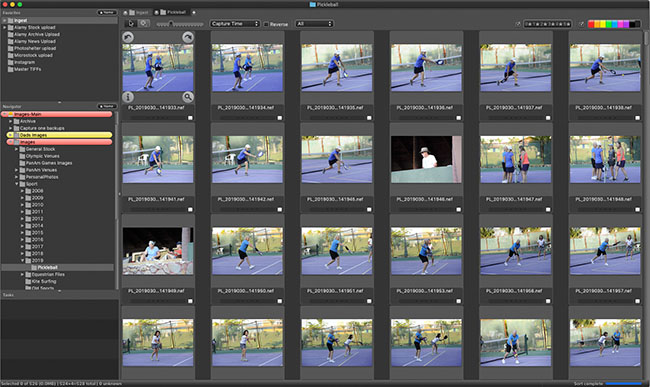
As anyone who has been on one of my Digital Workflow workshops will know one of the major failings by photographers hoping to break into the stock photography market is poor keywording. Most prople know enough to add the obvious descriptive keywords describing the subject of the image but are often poor at concept keywords - the very keywords often used by creative researchers from the big paying advertising photo buyers.
There are a number of ways that photographers can improve the keywording, and therefore, the sales potential, of their images.
These include
- outsourcing the keywording to companies that specialize in this task
- studying the keywords of similar images placed with your own and competing agencies
- building your own list of standard keywords to add to your images
- purchasing keywording add ons to existing software
- purchasing specific software to keyword images
The smart photographer will use several of the above to fit into their workflow so lets look at each one.
Outsourcing - can be very effective as these are specialists but unless you are making major sales through your agents this can be an expensive undertaking, especially if you are a heavy shooter.
Studying competing images - can be effective up to a point, but of course you are relying on the ability of others. Also be very careful, others keywording could be considered intellectual property and you should not simply cut and paste anothers keywords. Some agencies, including one of my own, Alamy forbid keyword copying (Extract from ALAMY site - Do not steal another contributor’s keywords or we will remove all the keywords in your collection in accordance with Clause 10(k) of our Contributor Agreement.)
Building your own keyword list - every photographer should do this as a matter of course, you know what images you take and the relevance of the keywords to those images. However this is a time consuming task but something that can be done over a period time. Also you need to think ‘outside the box’ and come up with keywords that might be used by a picture researcher, not an easy task.
Purchasing Keyword add-ons - this may be the most effective method for most combined with adding your own specialist words to the list. Of course there is a cost involved with the purchase but it is a one-off cost rather than a cost for every image. This is the method I use in conjunction with Photomechanic. The original keywording was purchased from www.controlledvocabulary.com but this has been added to and modified extensively to take account of my specialist subjects.
Purchasing specific software to keyword images - and now we come to the crux of this post. There may be a number of legitimate keywording software packages although I personally would not want to add yet another piece of software to my workflow. I was however interested to receive news from Cradoc systems (www.cradocfotosoftware.com) of their efforts in this field. I have been using Cradoc’s Fotoquote software to price images for several years and have always regarded them as a reputable company. I was therefore shocked to visit their website and discover just how this piece of software works.
The name of the software is Fotokeywordharvester an apt name. The principal is that the software searches a selection of stock photo sites for images that are similar to the one you are wanting to keyword and “harvests”, read steals, the keywords from those images and applies them to your own photo. In other words Cradoc is simply using the timne, effort and not to mention the expenses that others have put into their keywording. I regard keywording to be a comprhensive part of my images and not a seperate entity and therefore regard this practise as theft in the same way that I would regard unauthorized use of the image itself as theft.
Of course I realize that two good photographers will end up with vastly similar keywording, but suppose that I have added just one extra word that no one else has thought of (or I paid a company to do this) and that is the one keyword that brings my image to the attention of a photobuyer - I make the sale. Now someone else uses keyword harvester and suddenly my ‘exclusive’ keyword is applied to dozens of images, many of which may be totally irrelevent.
I would welcome comments by other photographers.
June 16, 2008
We are pleased to announce a new member of staff at Peter Llewellyn Photography.
Elsa joins us as Chief Cable chewer and disruptive influence in the office. Needless to say very little actual work got done today as she went into training for her new role!
June 13, 2008
Despite the Senate’s vote that stalled action this year, 54 Senators spoke up for the need to debate solutions to global warming, including 10 who had not supported similar legislation in the past.
SAVE Brasil
(BirdLife in Brazil) - has held a ceremony to recognise and acknowledge the huge contribution made by landowners to the conservation of the Boa Nova Important Bird Area.
Boa Nova, which occupies a transitional area between the Atlantic Forest and the Caatinga, is one of SAVE Brasil’s 16 priority IBAs (out of a total of 167), because of its exceptionally high biodiversity and the severity of the threats it faces (http://www.savebrasil.org.br/ingles/3e_boanova.asp).
UN Conference fails life on Earth
30-05-2008
With only 18 months to go until 2010, BirdLife urges the global community to face reality, cooperate and take responsibility for future generations
The United Nations Convention on Biological Diversity (CBD) fails to address the urgency of biodiversity loss by 2010 [1]. Although 191 countries agreed in Bonn [2] that the diversity of life on Earth is essential for human survival, and despite scientific proof that species are rapidly declining [3], they were unable to agree on many of the concrete steps forward that would have been necessary.
To read full story click here
The IUCN Red List 2008: Climate change and continental drift
19-05-2008
Climate change has become firmly established as an accelerant to many of the factors which have put one in eight of the world’s birds at risk of extinction, today’s publication of the 2008 IUCN Red List of Threatened Species of birds has found. Long-term drought and sudden extreme weather are putting additional stress on the pockets of habitat that many threatened species depend on. This coupled with extensive and expanding habitat destruction has lead to an increase in the rate of extinction on continents and away from islands, where most historical extinction has occurred.
To read full story click here
Calif. gov declares water emergency in farm area
Following his declaration last week of a drought in California, Gov. Arnold Schwarzenegger proclaimed on Thursday a state of emergency in nine counties in the state’s farm-rich Central Valley.
“Just last week, I said we would announce regional emergencies wherever the state’s drought situation warrants them, and in the Central Valley an emergency proclamation is necessary to protect our economy and way of life,” the Republican governor said in a statement.
To read full story click here
Protecting mountain gorillas
In July 2007, armed men entered the Democratic Republic of Congo’s Virunga National Park and killed five critically endangered mountain gorillas at point-blank range, leaving the bodies where they fell.
Since September, rebel forces have controlled the area, threatening to kill any conservationists or gorilla rangers who attempted to enter the area.
Diddy and Innocent are long-serving rangers who have spent their working lives protecting the remaining gorillas in the war-torn region.
In this weekly diary, they describe life on conservation’s frontline.
To Read full story click here
June 12, 2008
Of course I realize that equipment doesn’t make great photos - great photographers do. Something I try and hammer home on my field trips and workshops, especially when students drool over the equipment I have available to me. Of course having the right equipment certainly helps, which got me thinking how much gear does a nature photographer “really” need.
Now, I admit it, I am an equipment junky, and when those six numbers come up on the lottery the owners of B&H photo and the Camera Store in Calgary and going to have a big smile on their face when my order arrives. But, do I really need all those lenses, bodies and accessories and would they make me a better photographer? I suspect not. In fact I would probably spend so much time trying to decide what to use I would probably actually miss more opportunities
With this in mind I decided to take a look at the photos I take, the photos I sell, and the equipment used to take them. The surprising fact is that 70% of all the images were taken with just two lenses, my 600mm f4 (often with the addition of a converter), and my 80 - 200mm f2.8. Now, of course this reflects the type of photography that I am principally involved in, but that is true of every photographer out there. As far as the camera body used, it is simply the latest model in the bag. Each new generation of digital body has, so far, been such an improvement over the previous model that it makes no sense to use anything else.
If I were to look at this from a purely financial point of view I could have made the majority of my living with far less investment. Added to this, it is probably the case that some of the other 30% of images taken with the rest of my arsenal of lenses could possibly have also been made with the 80-200mm.
Does this mean I am going to get rid of all that extra glass - of course not! Things are subject to change, maybe in coming years I will photograph less birdlife and more mammals, or maybe my newfound interest in macro since taking delivery of my new 105mm f2.8 micro and close-up flash will take a larger percentage of my work. what it does mean is that you can produce a large body of work with a relatively small amount of gear. (OK, I realize the cost of the 600 is more than most people spend on a complete outfit but that is the nature of my work).
Every photographer has his favourite equipment so, in order my favourite lenses are:
- 600mm f4
- 200 - 400 f4 (I know this does not feature above but I have only had this lens for a few weeks and if this article is re-written in a years time it is going to be right up there.
- 70-200 f2.8
- 105mm f2.8 micro
- 17-55m f2.8
Throw in a couple of converters and this would give me the glass to tackle just about any assignment, so bring them on!
June 5, 2008
May 21 to 1 June saw me at Thunderbird showpark in Langley, British Columbia for the start of my last season shooting the equestrian world. As many of you know I have sold my collection of equestrian images to a BC publishing company and from 2009 will be shooting exclusively wildlife and nature images and running my workshop and field trip program.
This was the first occasion that I have extensively used the 200-400 f4 and the D3. Perhaps I should say almost exclusively used this combination probably shooting over 80% of all the images from this event. If you are an event photographer and a Nikon user this is a practically unbeatable setup. Razor sharp photos, VR and a decent maximum aperture combine to provide a shooting opportunity for practically every possible shot.
Weather conditions varied enormously and I shot at every ISO setting from 1200 to 200 and the D3 continues to amaze me with it’s super clean files, and excellent colour balance. With the majority of the Olympic equestrian events this year taking place under floodlight in the evenings a second D3 body looks like a necessity.
Monday’s equestrian workshop was a huge success with two horses that were among the most accommodating I have ever had to work with. A couple of places have become available for the next workshop on 30 June so if interested please contact me as soon as possible.
May 14, 2008
I will be leaving for the first major equestrian event at Thunderbird showpark in Langley near Vancouver next week. If you are still interested in either of the two Equestrian Photography Workshops (Monday May 26 - 1 place left, Monday June 30 4 places left) please ensure that you book now
Next Page »
|